BK Häcken vs Sirius: the control gap is small, but the attacking ceiling is not
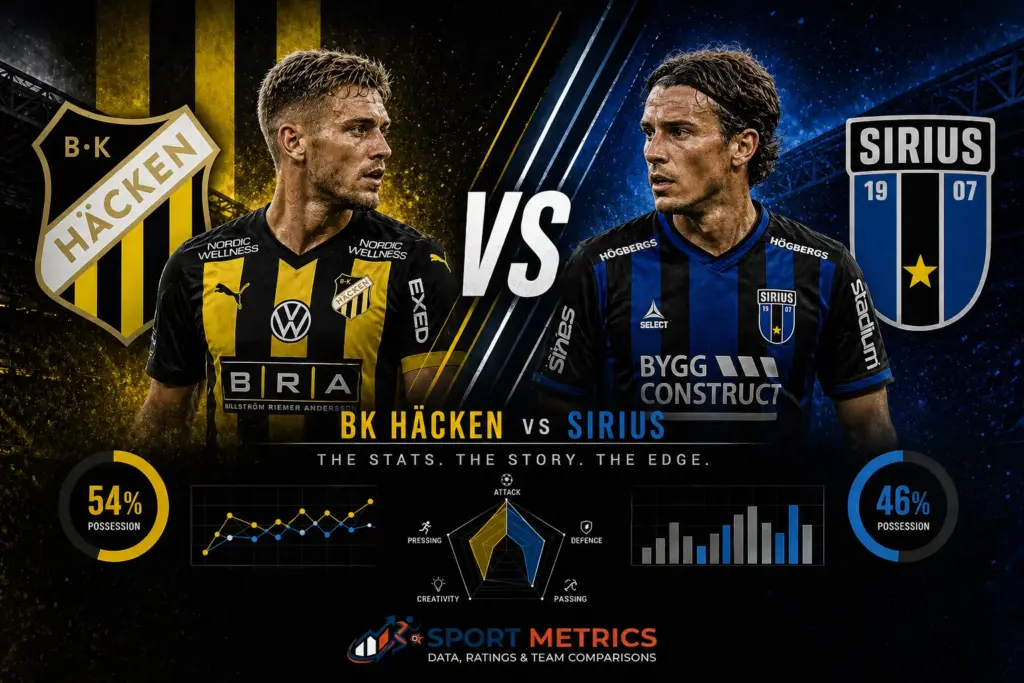
Sirius carry a clear TSI edge here, with the headline strength split at 55.73 vs 70.05. The more interesting part is how that advantage is built: this matchup is not driven by one clean number, but by the interaction between attack quality, territorial control, and the defensive floor each side brings into Allsvenskan.
Headline edge meter
This TSI gap of -14.32 is in favor of Sirius. That points to a clear pre-match edge rather than a runaway mismatch, so the supporting metrics matter more than the headline alone.
1. Attacking Production & Quality
The first question is simple: which side is creating the more reliable threat, and is that edge coming from better shot quality, cleaner finishing, or sustained box pressure?
Sirius carry the cleaner headline attacking case. They come in at 3.000 goals per game against 2.250, and that matters because this is not just about who shoots more often. The better read comes from how those attacks are built and how often they turn dangerous touches into real pressure.
Sirius hold the edge in chance quality and penalty-area dominance is basically level between the two sides. In football terms, that tells you which side is more often reaching useful shooting zones instead of padding out the profile with harmless volume. The finishing layer adds another angle: Sirius are converting shots at 24.5%, while the lower side sits at 16.4%.
The accuracy split is worth keeping in view too. Sirius place 34.7% of their shots on target versus 34.5% for the other side. When chance quality, box authority, conversion, and accuracy all point in the same direction, the attacking edge is easy to trust. When they do not, the right call is to say the edge exists but is fragile.
That consistency is why the attacking read carries weight here. This is not a one-metric argument. The side with the better output also has enough support in chance quality and finishing efficiency to justify the headline.
2. Match Control & Trajectory
Base strength only matters if it shows up in the flow of the game. This section checks who should drive territory, shot share, and the recent trajectory of the matchup.
BK Häcken look more likely to dictate the flow of the game. The Match Control Index split is 1.203 vs 1.027, while the Shot Volume Index sits at 1.122 vs 1.065. Those are useful signals because they tell you who should spend more time pushing the game in the right direction rather than merely surviving it.
The shot-share layer helps sharpen that read. Shot Dominance Ratio stands at 0.475 for BK Häcken and 0.586 for Sirius. That number is simple but important: it shows which side tends to claim the larger share of on-target threat. If the control edge and the shot-share edge align, the likely match script becomes easier to picture.
Recent trajectory is the next check. Sirius are stronger on RFI5 at 3.0 against 2.0, and Neither side has a real numerical edge also rate better on Goal Difference Momentum. That does not settle the match by itself, but it does tell you whether current form is confirming the broader profile or pushing against it.
Here, the control picture is not perfectly tidy. Some of the territorial indicators lean one way, while the recent-form layer or the shot-share layer complicates it. That usually points to a match where momentum swings matter and where the stronger side may still have to earn control in phases rather than own it from kickoff to full time.
3. Defensive Contrast & Game State
The last layer is game-state safety: who is better equipped to absorb pressure, who is more likely to keep the score manageable, and whether the total looks compressed or loose.
Sirius bring the steadier defensive floor. The Defensive Resilience Index is 50.0% for BK Häcken and 75.0% for Sirius, while goals conceded per game are 1.500 and 0.750. That combination usually tells you which team is more reliable at keeping the match inside manageable limits.
Sirius also rate better on pure damage prevention, and Sirius are stronger on Shot Suppression Rate, where lower is better. A side can survive mediocre possession numbers if it still limits high-quality looks. It is much harder to live with a weak suppression profile over 90 minutes.
The scoring-environment data points toward an open game with repeated scoring phases. Over 2.5 trends sit at 75.0% and 75.0%, with BTTS numbers at 75.0% and 50.0%. Those figures do not predict the total on their own, but they help frame whether the weaker team can drag the game into a slower, thinner script.
BK Häcken do more of their damage after the break, so second-half leverage is part of their case here. Sirius do not show an extreme timing split, which makes their overall process more important than a single scoring window. Together, those timing splits tell you when the pressure is more likely to build and whether a level halftime score would genuinely flatten the matchup or simply delay the stronger phase.